
AWD vs. 4WD – Dev
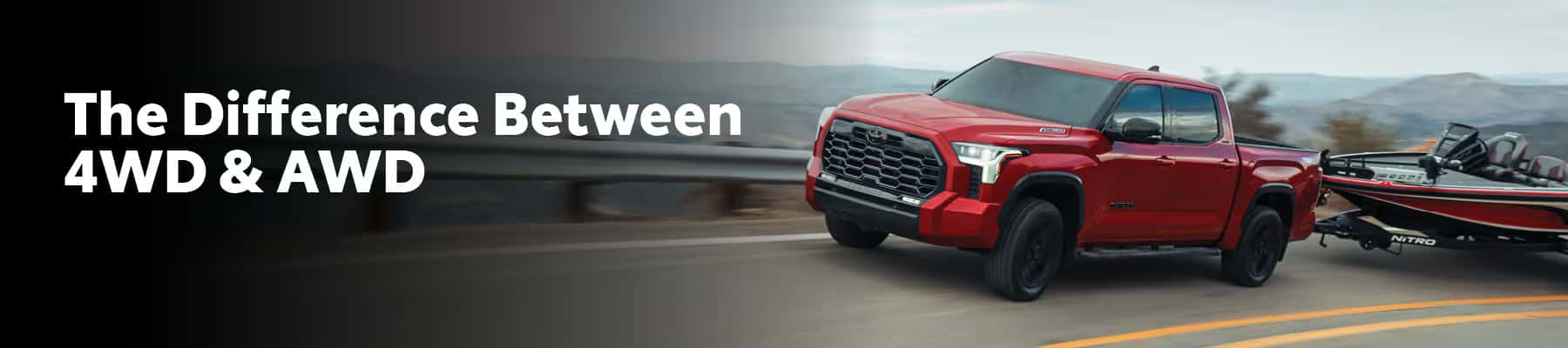
A February morning in Lincolnwood tells you why drivetrain matters. The Edens is half-plowed, your side street has not been touched, and the forecast flips from snow to freezing rain by lunch. Whether your Toyota sends power to all four wheels through all-wheel drive (AWD) or four-wheel drive (4WD) changes how confidently you get to work. The two terms get used interchangeably, but the systems are built for different jobs. Here is how each one works, where each earns its keep around Chicagoland, and which Toyota models offer them.
AWD vs. 4WD at a Glance
The short version: AWD is automatic and tuned for on-road traction in rain and snow, while 4WD is tougher, driver-engageable, and built for deep snow, off-road use, and towing.
| All-Wheel Drive (AWD) | Four-Wheel Drive (4WD) | |
|---|---|---|
| How it engages | Automatic, always working | Driver-selectable or full-time |
| Low-range gearing (4LO) | No | Yes |
| Best for | Rain, ice, packed snow on pavement | Deep snow, mud, trails, heavy towing |
| Vehicle type | Car-based crossovers & sedans | Body-on-frame trucks & SUVs |
| Fuel efficiency | Higher | Lower |
| Driver effort | None | Some (part-time systems) |
| Toyota examples | RAV4, Highlander, Camry, Crown Signia | Tacoma, Tundra, 4Runner, Sequoia, Land Cruiser |
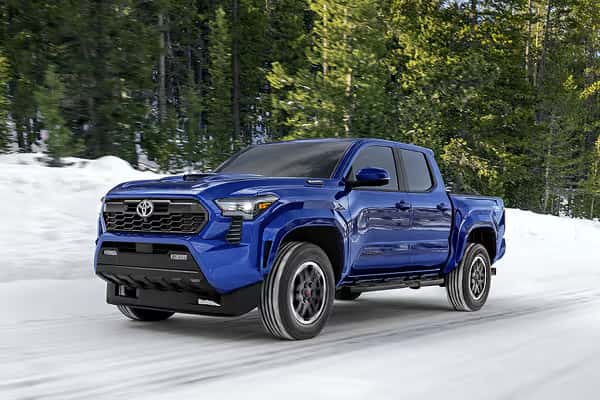
What Is Four-Wheel Drive (4WD)?
Four-wheel drive (4WD), or 4×4, is a drivetrain that routes engine power through a transfer case to split torque between the front and rear axles, driving all four wheels for maximum traction on low-grip surfaces. It is the traditional system found on trucks and off-road SUVs, and it comes in two forms:
- Part-time 4WD — you select 2WD, 4-High, or 4-Low as conditions demand. Best left in 2WD on dry pavement to avoid driveline binding.
- Full-time 4WD — always powering all four wheels through a center differential (Toyota uses a TORSEN limited-slip center diff on models like the 4Runner, Sequoia, and Land Cruiser), so it is safe on dry roads too.
The defining 4WD feature is low-range gearing (4-Low), which multiplies torque for crawling over rocks, through mud, or up an unplowed grade. Toyota pairs its 4WD hardware with off-road tech like Multi-Terrain Select, Crawl Control, and available locking rear differentials. If you tow a trailer, work off pavement, or need to push through an unplowed job site after a Midwest snowstorm, 4WD gives you the low-end control and traction that AWD does not.
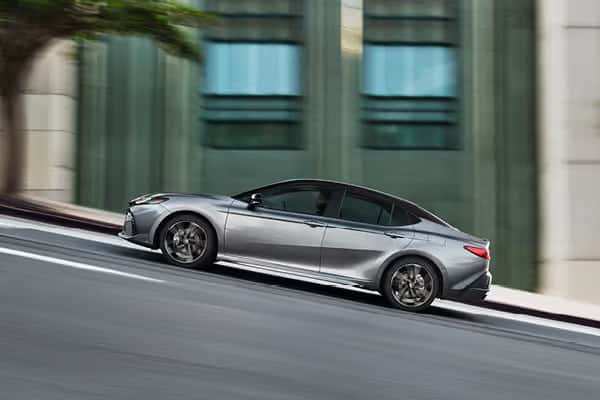
What Is All-Wheel Drive (AWD)?
All-wheel drive (AWD) is a drivetrain that sends power to all four wheels automatically, adjusting torque in real time without any driver input. Some systems run front-wheel drive until they detect slip and then engage the rear wheels; others maintain constant power to all four. On Toyota’s gas crossovers, this is Dynamic Torque Control AWD; on hybrids like the RAV4 Hybrid, Crown Signia, Sienna, and Prius, it is an Electronic On-Demand AWD system that uses a separate rear-mounted electric motor to drive the rear wheels when needed — no driveshaft required.
Because AWD works in the background and has no low-range gears, it prioritizes everyday on-road security and fuel efficiency over hardcore off-road capability. That is exactly the tradeoff most commuters want. Whether you are merging onto the Kennedy in a downpour or climbing an icy on-ramp in Skokie, AWD adds grip the instant a wheel starts to slip, without you having to think about it.
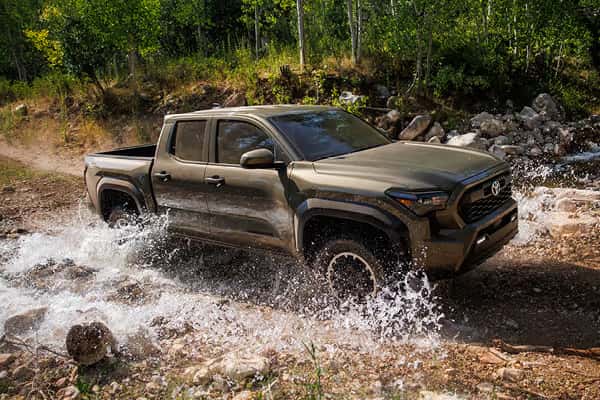
When Should You Choose 4WD?
Choose 4WD if you regularly leave the pavement, tow heavy loads, or want the strongest possible traction in severe conditions. It is the right call if you:
- Drive on unpaved, rugged, or uneven terrain
- Tow trailers or haul heavy gear in demanding conditions
- Face deep snow, muddy job sites, or unplowed roads around Chicagoland
- Want low-range crawling capability and off-road hardware
4WD-equipped Toyotas like the Tacoma, Tundra, 4Runner, Sequoia, and Land Cruiser combine rugged capability with higher ground clearance — built for drivers who need performance beyond the everyday commute.
When Should You Choose AWD?
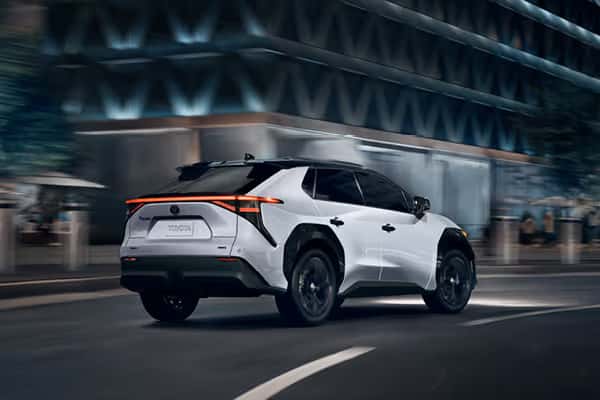
Choose AWD if you drive mostly on paved roads but want automatic, all-weather confidence with better fuel economy. It is the right call if you:
- Want a system that adapts to changing road conditions on its own
- Drive primarily on pavement but want added grip in rain, ice, or snow
- Commute daily around Lincolnwood, Chicago, Skokie, or Evanston
- Prefer a smooth, efficient ride with no drivetrain settings to manage
AWD is offered across a wide range of Toyota crossovers, sedans, and minivans — ideal for families, commuters, and anyone who wants year-round traction without sacrificing efficiency or comfort.
Toyota Vehicles Available with 4WD
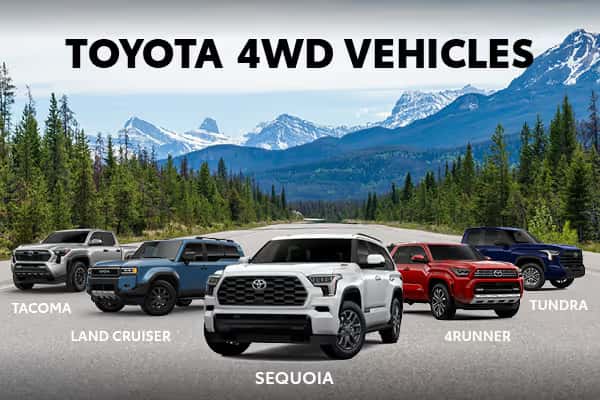
If you want genuine 4WD capability in the Chicago area, Toyota builds a lineup of body-on-frame trucks and SUVs made for harsh Midwest winters and weekend adventures:
- Toyota Tacoma — a midsize pickup known for off-road capability and available part-time 4WD
- Toyota Tundra — a full-size truck built for towing and heavy-duty work
- Toyota 4Runner — redesigned on the TNGA-F platform, with available part-time and full-time 4WD
- Toyota Sequoia — a full-size family SUV that pairs comfort with true 4WD
- Toyota Land Cruiser — the returning off-road icon with full-time 4WD and serious trail hardware
These vehicles deliver added confidence on snow-covered roads, rugged terrain, and off-road trails, making them an excellent choice for drivers who demand more than everyday capability.
Toyota Vehicles Available with AWD
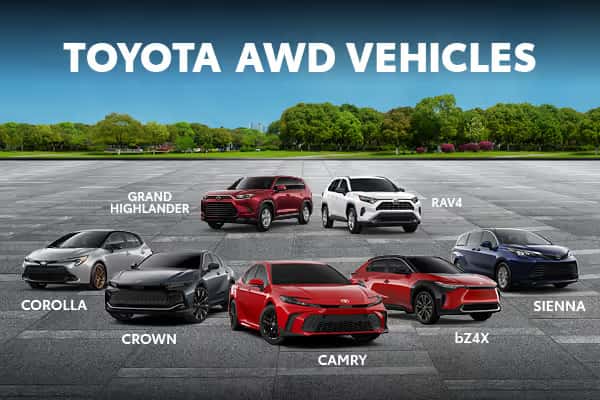
For an all-weather commuter or a family hauler, Toyota’s AWD lineup balances comfort, control, and efficiency — and AWD is now available on more Toyota models than ever:
- Toyota RAV4 — a compact SUV for daily drives and weekend trips (gas, Hybrid, and Plug-in Hybrid AWD)
- Toyota Highlander & Grand Highlander — two- and three-row SUVs with available AWD
- Toyota Camry — now hybrid-only, with available all-wheel drive on every trim
- Toyota Crown Signia — a premium hybrid SUV with standard electronic on-demand AWD
- Toyota Corolla Cross — a compact crossover with available (and hybrid-standard) AWD
- Toyota Sienna — one of the only minivans on the market with available AWD
Whether you are commuting in Chicago, running errands in Lincolnwood, or heading to Wisconsin or Michigan for a weekend, AWD adds traction and confidence when you need it most.
The Bottom Line for Lincolnwood Drivers
For most drivers around Lincolnwood, Skokie, and Evanston, AWD is the right answer — a RAV4 or Highlander with AWD handles a Chicago winter commute with zero effort and better fuel economy than a truck. Choose 4WD when you tow, work off pavement, or want the deep-snow and trail capability of a Tacoma, Tundra, 4Runner, Sequoia, or Land Cruiser. One honest caveat worth knowing: drivetrain helps you get moving, but it does not help you stop or turn on ice — that comes down to your tires. If you split your winters between the city and unplowed back roads, a set of dedicated winter tires on an AWD Toyota will do more for you than stepping up to 4WD you will rarely engage.
Frequently Asked Questions
Is AWD or 4WD better for Chicago winters?
For most Chicago-area drivers, AWD is the better everyday choice. It works automatically on snowy and icy pavement and is more fuel-efficient. 4WD is better if you tow, drive off pavement, or regularly face deep, unplowed snow.
Does AWD help you stop faster on ice?
No. AWD improves traction when accelerating, but it does not shorten braking distances or improve cornering grip on ice — that comes from your tires and brakes. Winter tires make a far bigger difference in stopping and turning.
Which Toyota models come with AWD?
AWD is available on the RAV4, Highlander, Grand Highlander, Camry, Corolla Cross, Sienna, Prius, bZ, and is standard on the Crown Signia. Many are offered as efficient hybrids with electronic on-demand AWD.
Do all Toyota trucks and SUVs have 4WD?
No. Toyota trucks and body-on-frame SUVs like the Tacoma, Tundra, 4Runner, Sequoia, and Land Cruiser are available with 4WD, but many are also sold in 2WD. 4WD is typically an option or tied to specific trims.
Can you drive part-time 4WD on dry pavement?
You should not leave part-time 4WD engaged on dry pavement — it can cause driveline binding and premature wear. Full-time 4WD and AWD systems, by contrast, are designed to run on any surface.
Does AWD or 4WD lower fuel economy?
Both add weight and drivetrain drag, so they slightly reduce fuel economy versus 2WD. AWD’s impact is smaller, and Toyota’s hybrid AWD systems minimize it — several AWD hybrids still top 35 MPG combined.
Find Your AWD or 4WD Toyota in Lincolnwood, IL
At Serra Toyota Lincolnwood, we help you match the right drivetrain to how you actually drive — whether that is an AWD RAV4 for the daily commute or a 4WD Tundra for towing and winter work. Stop by 7225 N. Cicero Avenue in Lincolnwood or call 847-675-7100, and we will line up the models on your shortlist so you can feel the difference before you decide.