Open Today Sales: 9 AM-8 PMOpen Today Service: 7 AM-7 PMOpen Today Parts: 7 AM-7 PM
Open Today Sales: 9 AM-8 PMOpen Today Service: 7 AM-7 PM
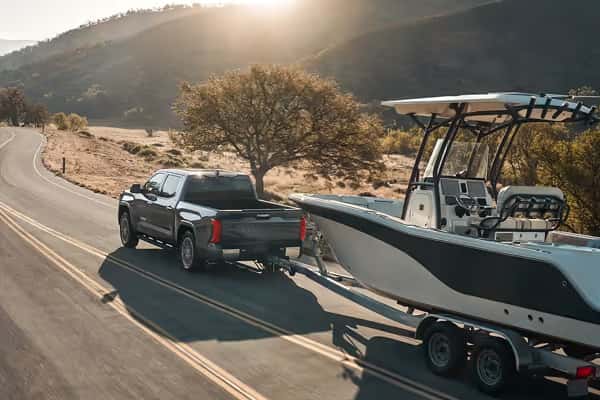
If you are cross-shopping a new pickup anywhere from Chicago’s North Side up through Skokie, Evanston, and Niles, the choice usually comes down to two Toyotas and a short list of rivals. The 2026 Toyota Tundra takes on the full-size class — Ford F-150, Chevrolet Silverado 1500, and Ram 1500 — while the 2026 Toyota Tacoma squares off with the midsize field: Honda Ridgeline, Nissan Frontier, and Ford Ranger. Both trucks carry over their recent ground-up redesigns with a handful of 2026 updates worth knowing, including a tow hitch receiver and 7/4-pin connector now standard on every Tundra. Below, we break down where each one earns its keep — power, towing, technology, and long-haul ownership — so you can walk into Serra Toyota Lincolnwood on Cicero Avenue knowing which build fits your driveway, your trailer, and a Chicago winter.
The full-size class is decided on strength, towing, payload, and how well a truck lives with you the other 90% of the time — the school run down McCormick, the Home Depot trip, the plow-scarred stretch of the Edens. The 2026 Tundra answers with a twin-turbo V6 across the board, a genuine hybrid option, and a long list of standard tech and safety that many rivals still charge extra for. It is built to haul on the weekend and behave on a Monday commute.
| Spec | 2026 Tundra | Ford F-150 | Silverado 1500 | Ram 1500 |
|---|---|---|---|---|
| Base horsepower | 358–389 hp | 325 hp | 310 hp | 305 hp |
| Hybrid output | 437 hp / 583 lb-ft | 430 hp (PowerBoost) | Diesel option | eTorque mild-hybrid |
| Max towing | 12,000 lb | 13,500 lb | 13,300 lb | 11,610 lb |
| Max payload | ~1,940 lb | ~2,440 lb | ~2,260 lb | ~2,370 lb |
| Full hybrid | Yes (i-FORCE MAX) | Yes (PowerBoost) | No (diesel) | No (eTorque) |
| Wireless CarPlay | Standard | Available | Available | Available |
| Complimentary maint. | 2 yr / 25k (ToyotaCare) | None | Limited | None |
| Basic warranty | 3 yr / 36k mi | 3 yr / 36k mi | 3 yr / 36k mi | 3 yr / 36k mi |
| Starting MSRP (approx.) | ~$40,000 | ~$38,800 | ~$37,700 | ~$40,300 |
| Base horsepower | 358–389 hp |
| Hybrid output | 437 hp / 583 lb-ft |
| Max towing | 12,000 lb |
| Max payload | ~1,940 lb |
| Full hybrid | Yes (i-FORCE MAX) |
| Wireless CarPlay | Standard |
| Complimentary maint. | 2 yr / 25k (ToyotaCare) |
| Basic warranty | 3 yr / 36k mi |
| Starting MSRP (approx.) | ~$40,000 |
| Base horsepower | 325 hp |
| Hybrid output | 430 hp (PowerBoost) |
| Max towing | 13,500 lb |
| Max payload | ~2,440 lb |
| Full hybrid | Yes (PowerBoost) |
| Wireless CarPlay | Available |
| Complimentary maint. | None |
| Basic warranty | 3 yr / 36k mi |
| Starting MSRP (approx.) | ~$38,800 |
| Base horsepower | 310 hp |
| Hybrid output | Diesel option |
| Max towing | 13,300 lb |
| Max payload | ~2,260 lb |
| Full hybrid | No (diesel) |
| Wireless CarPlay | Available |
| Complimentary maint. | Limited |
| Basic warranty | 3 yr / 36k mi |
| Starting MSRP (approx.) | ~$37,700 |
| Base horsepower | 305 hp |
| Hybrid output | eTorque mild-hybrid |
| Max towing | 11,610 lb |
| Max payload | ~2,370 lb |
| Full hybrid | No (eTorque) |
| Wireless CarPlay | Available |
| Complimentary maint. | None |
| Basic warranty | 3 yr / 36k mi |
| Starting MSRP (approx.) | ~$40,300 |
Every 2026 Tundra runs a 3.4L i-FORCE twin-turbo V6. The SR makes 358 horsepower and 406 lb-ft; step up to SR5 and above and you get 389 horsepower with 479 lb-ft, which unlocks the Tundra’s peak 12,000-lb tow rating when properly equipped. The available i-FORCE MAX hybrid pairs that V6 with an electric motor for 437 horsepower and 583 lb-ft of torque — and because the electric assist arrives instantly, it is the setup that feels strongest pulling a loaded trailer away from a light or up an on-ramp. Hybrid trims tow up to 11,450 lb. New for 2026, a tow hitch receiver and 7/4-pin connector are standard on every grade, and a 32.2-gallon tank is now standard for more range under load. Payload runs up to roughly 1,940 lb on the right configuration.
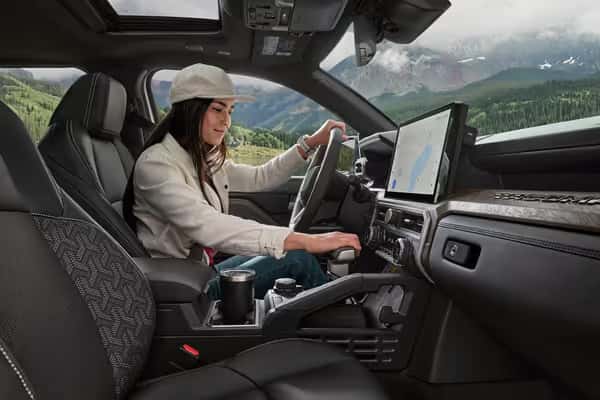
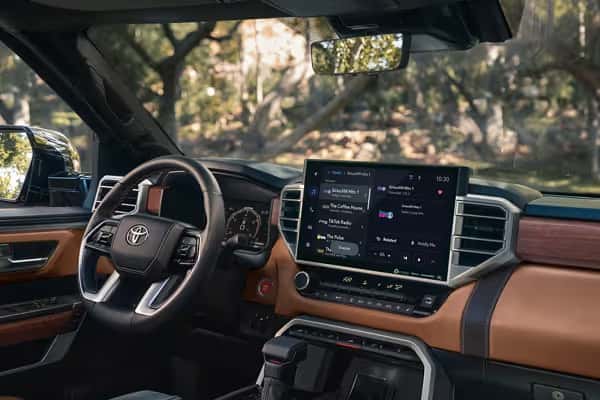
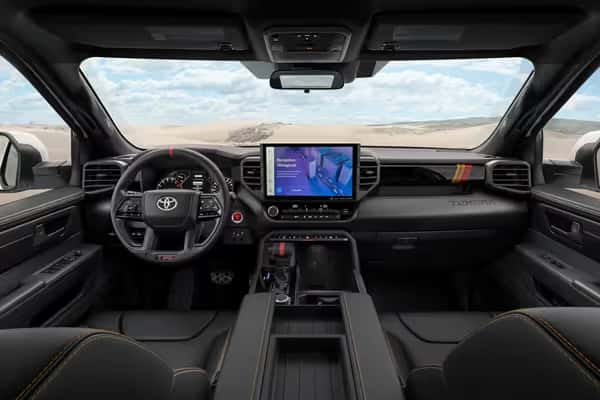
Tundra pairs an available 14-inch Toyota Audio Multimedia touchscreen with a 12.3-inch digital gauge cluster, and both wireless Apple CarPlay and Android Auto are on board — no cable required when you grab coffee off Touhy on the way in. Available Toyota Connected Services add remote start, lock/unlock, and vehicle-location from your phone, which matters on a January morning in a Lincolnwood driveway. Toyota Safety Sense is standard, bundling Full-Speed Range Dynamic Radar Cruise Control, Lane Tracing Assist, automatic high beams, and the Pre-Collision System with Pedestrian Detection — useful on a crowded Kennedy merge and a quiet residential block alike. The 2026 Tundra Crew Cab is an IIHS Top Safety Pick.
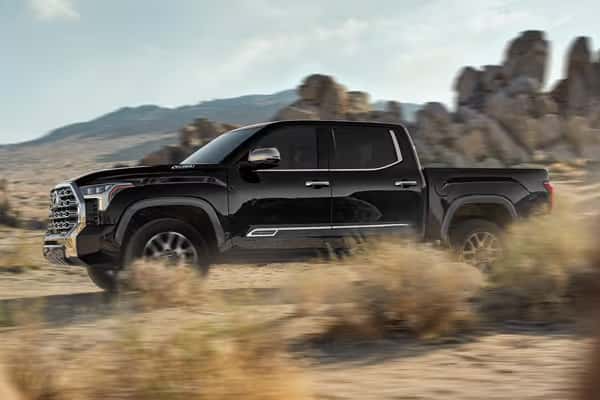
The Tundra ladder runs from the work-ready SR and SR5 to the upscale Limited, Platinum, 1794 Edition, and range-topping Capstone, with equipment and comfort climbing as you go — larger digital displays, premium audio, panoramic roofs, and heated-and-ventilated seating up top. The TRD Pro brings the off-road hardware: FOX shocks, all-terrain tires, skid protection, and its own styling, plus available ISO Dynamic seats that damp out the rough stuff. For most North Shore buyers who tow a boat a few weekends a year and commute the rest, an SR5 or Limited i-FORCE MAX is the sweet spot.
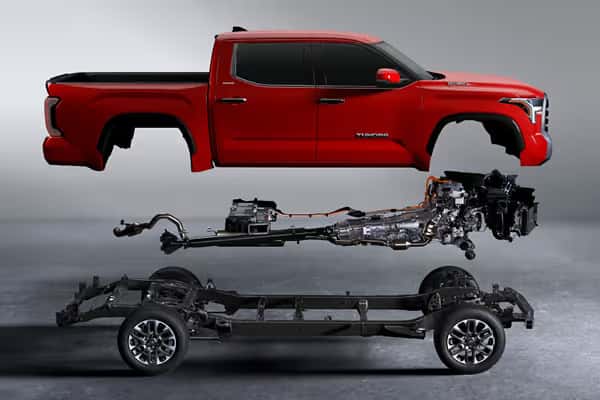
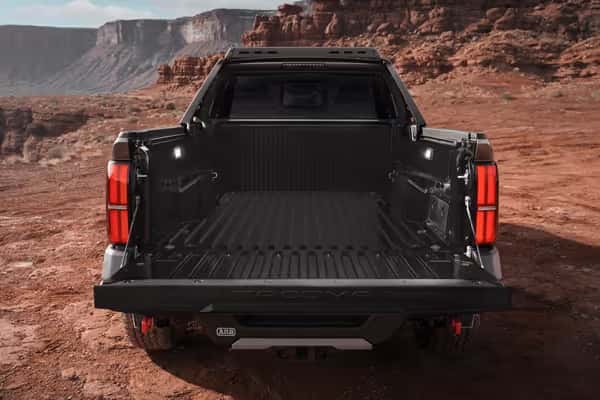
Ford F-150: The F-150 leads the class on paper for maximum towing (up to 13,500 lb) and payload (up to ~2,440 lb), and its six-engine range — including the PowerBoost full hybrid — is the broadest here. Where Tundra pushes back is standard content: a tow hitch and 7/4-pin connector come standard on every 2026 Tundra, and its safety and multimedia suites are standard rather than climb-the-trims options. If maximum trailer weight is the single deciding number, the F-150 has it; if you want strong capability with fewer boxes to check and Toyota’s ownership record, Tundra makes the case.
Chevrolet Silverado 1500: Silverado counters with a wide spread of cab, bed, and engine choices — including the 3.0L Duramax diesel that anchors its 13,300-lb tow ceiling — and genuinely useful hardware like the six-way Multi-Flex tailgate. Tundra’s answer is a single, simplified high-torque V6 strategy plus a full hybrid, an aluminum-reinforced composite bed, and a multimedia system built around ease of use. Both are strong tow rigs; the difference is Silverado’s configurability versus Tundra’s standard-equipment simplicity and hybrid torque.
Ram 1500: Ram is known for the plushest ride and cabin in the segment, especially in upper trims, and its Hurricane inline-six is potent. Tundra’s reply is the instant torque of the i-FORCE MAX hybrid, standard safety and tow equipment, and Toyota’s long-term durability reputation backed by a dense dealer and service network — the kind of thing that matters when you plan to keep a truck a decade. On max towing, Tundra’s 12,000 lb edges Ram’s ~11,610 lb.
| Spec | 2026 Tacoma | Honda Ridgeline | Nissan Frontier | Ford Ranger |
|---|---|---|---|---|
| Base horsepower | 278 hp | 280 hp | 310 hp | 270 hp |
| Hybrid output | 326 hp / 465 lb-ft | None | None | None |
| Max towing | 6,500 lb | 5,000 lb | 7,150 lb | 7,500 lb |
| Drivetrain | 4WD available | AWD only | 4WD available | 4WD available |
| Onboard power | 2,400W (hybrid) | Bed outlet (115V) | Available outlet | Available outlet |
| Combined MPG | ~23–24 (hybrid) | ~20–21 | ~21 | ~22 |
| Wireless CarPlay | Standard | Available | Available | Available |
| Complimentary maint. | 2 yr / 25k (ToyotaCare) | None | None | None |
| Starting MSRP (approx.) | ~$32,000 | ~$42,300 | ~$32,050 | ~$33,000 |
| Base horsepower | 278 hp |
| Hybrid output | 326 hp / 465 lb-ft |
| Max towing | 6,500 lb |
| Drivetrain | 4WD available |
| Onboard power | 2,400W (hybrid) |
| Combined MPG | ~23–24 (hybrid) |
| Wireless CarPlay | Standard |
| Complimentary maint. | 2 yr / 25k (ToyotaCare) |
| Starting MSRP (approx.) | ~$32,000 |
| Base horsepower | 280 hp |
| Hybrid output | None |
| Max towing | 5,000 lb |
| Drivetrain | AWD only |
| Onboard power | Bed outlet (115V) |
| Combined MPG | ~20–21 |
| Wireless CarPlay | Available |
| Complimentary maint. | None |
| Starting MSRP (approx.) | ~$42,300 |
| Base horsepower | 310 hp |
| Hybrid output | None |
| Max towing | 7,150 lb |
| Drivetrain | 4WD available |
| Onboard power | Available outlet |
| Combined MPG | ~21 |
| Wireless CarPlay | Available |
| Complimentary maint. | None |
| Starting MSRP (approx.) | ~$32,050 |
| Base horsepower | 270 hp |
| Hybrid output | None |
| Max towing | 7,500 lb |
| Drivetrain | 4WD available |
| Onboard power | Available outlet |
| Combined MPG | ~22 |
| Wireless CarPlay | Available |
| Complimentary maint. | None |
| Starting MSRP (approx.) | ~$33,000 |
Figures are for properly-equipped configurations at the top of each range; actual numbers vary by trim, bed, and drivetrain. MSRP excludes destination, dealer fees, and taxes.
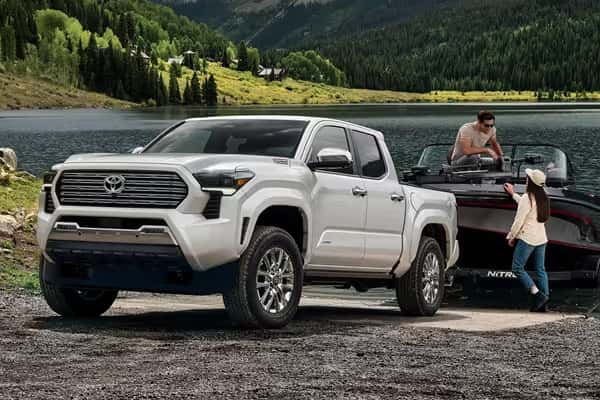
The midsize class is where capability meets a truck you can actually park on a side street in Rogers Park or slot into a Lincolnwood garage. The 2026 Tacoma is built on Toyota’s TNGA-F truck platform — real body-on-frame utility — with a turbocharged base engine, an available hybrid, and enough trim breadth to cover a job-site pickup and a weekend overlander. It is the right size for a tight North Side alley and still tows a real trailer.
The standard 2.4L i-FORCE turbo four makes 278 horsepower and 317 lb-ft (the SR is tuned to 228 hp; a 6-speed manual is available on select trims at 270 hp). Properly equipped gas Tacomas tow up to 6,500 lb. The available i-FORCE MAX hybrid steps up to 326 horsepower and 465 lb-ft, tows up to about 6,000 lb, and — the part owners actually feel — delivers its torque instantly off the line, which helps merging onto the Edens with a trailer or a bed full of gear. Every hybrid also carries a 2,400W onboard AC inverter feeding outlets in the cab and bed, enough to run power tools at a job site or a fridge at a campsite. A Class IV hitch and wiring are standard on every trim.
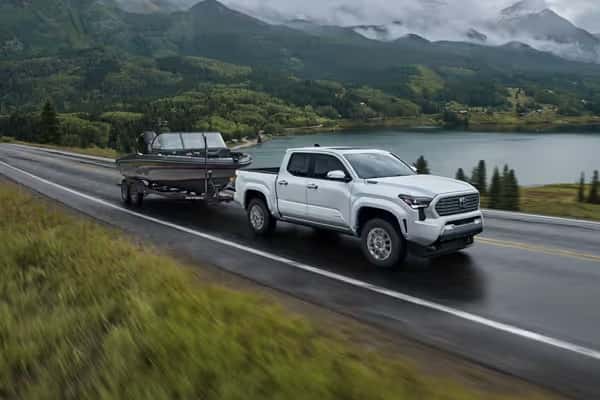
Across the lineup, Tacoma includes wireless Apple CarPlay and Android Auto, Bluetooth, and multiple USB-C ports, with an available 12.3-inch digital cluster and larger touchscreen on higher trims. Toyota Safety Sense is standard — adaptive cruise, lane-departure alert with steering assist, and pre-collision braking that earn their keep in stop-and-go on the Kennedy. Move up the range and you add navigation, upgraded audio, and camera views that make squeezing into a tight Evanston parking spot far less stressful.
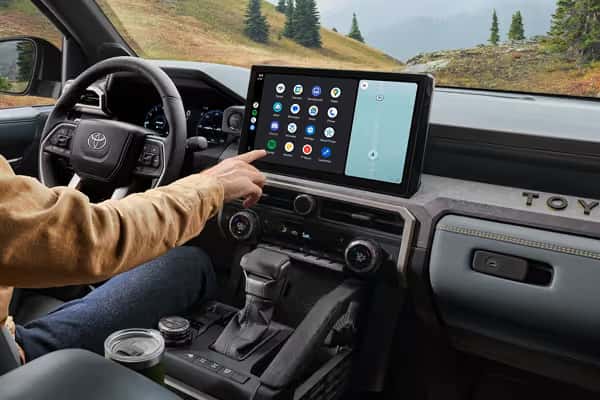
Tacoma spans SR and SR5 through TRD Sport, TRD Off-Road, Limited, Trailhunter, and TRD Pro. The TRD Pro brings FOX internal-bypass shocks, all-terrain tires, and IsoDynamic performance seats; the TRD Off-Road adds Multi-Terrain Select, Crawl Control, and a locking rear differential for genuinely rough terrain. Trailhunter is the factory overlanding build. Limited focuses on comfort and premium materials. Whichever you choose, the coil-spring multi-link rear on most trims meaningfully improves ride quality over the old leaf-sprung Tacoma — noticeable on Chicago’s pothole season.
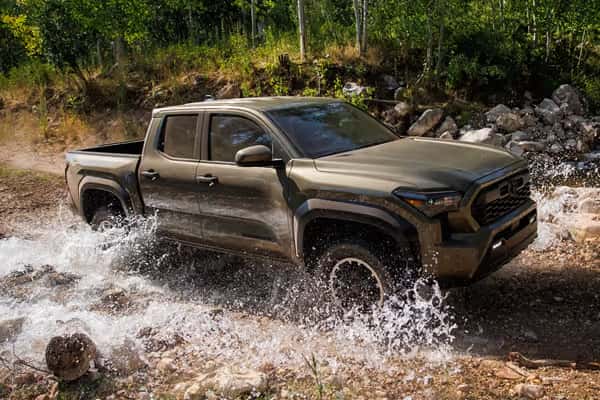
Honda Ridgeline: The Ridgeline is the comfort-and-refinement pick — unibody construction, a car-like ride, standard AWD, and clever touches like the in-bed trunk and dual-action tailgate. What it does not do is match Tacoma’s body-on-frame off-road hardware or its 6,500-lb tow ceiling; Ridgeline tops out at 5,000 lb and offers no low-range or locking differential. For a buyer who mostly pavement-commutes and hauls the occasional load, Ridgeline is excellent. For real trail duty or heavier towing, Tacoma is the more capable tool.
Nissan Frontier: Frontier brings a strong standard 3.8L V6 (310 hp), a keen price, and a class-leading 7,150-lb tow rating among these three. Tacoma answers with a hybrid option none of these rivals offer, a broader specialized-trim range (Trailhunter, TRD Pro), and Toyota’s resale and ownership record. If lowest entry price and max V6 tow are the priorities, Frontier is a serious value; if you want hybrid torque, trim breadth, and long-term hold value, Tacoma pulls ahead.
Ford Ranger: The current Ranger is genuinely competitive — a 270-hp 2.3L EcoBoost, up to 7,500-lb towing, and sharp tech, with a Raptor at the top for desert-running. Tacoma’s counter is the i-FORCE MAX hybrid’s instant torque and onboard power, a deeper off-road trim ladder, and Toyota reliability. On maximum tow, Ranger has a slight edge; on powertrain choice and resale, Tacoma does.
Both Tundra and Tacoma run Toyota Audio Multimedia with wireless Apple CarPlay and Android Auto, Bluetooth, and multiple USB-C ports, on touchscreens sized to the trim — up to 14 inches on Tundra. Higher trims add built-in navigation and premium audio.
Toyota Safety Sense is standard on every 2026 Tundra and Tacoma. It includes:
Together these reduce fatigue on a long tow and add a margin of safety in Chicago traffic.
TRD Pro and TRD Off-Road packages add FOX shocks, all-terrain tires, skid plates, unique styling, and suspension tuning — hardware that also pays off in deep snow and unplowed lots, not just on a trail.
A truck in Chicagoland lives a specific life: road salt from November to April, lake-effect snow, freeze-thaw potholes, and tight urban parking. Toyota’s available part-time 4WD and Multi-Terrain Select give both trucks real traction when the Edens is a sheet of slush, and the i-FORCE MAX hybrids’ low-end torque helps you pull away cleanly on an icy grade. The high-strength steel frames and corrosion protection are built for exactly this kind of salt exposure, and the standard camera systems — up to Tundra’s Panoramic View Monitor — make backing into a snowbanked Lincolnwood driveway or a compact Evanston garage far easier. When spring finally comes and it is time to tow the boat up to the Chain O’Lakes or a trailer to Wisconsin, the same trucks are ready for that too. Choose the Tundra if you regularly tow heavy — a larger boat, a car trailer, a big travel trailer — or you want full-size cab space and the instant torque of the i-FORCE MAX hybrid for a mix of hauling and daily driving. It is the right truck for the buyer who wants near-class-max capability with more standard equipment and Toyota’s long-term reliability record. Choose the Tacoma if you want real truck capability in a size that fits a city garage and a tight North Side street, plan to get off-pavement, or want the most fuel-efficient way to own a midsize truck thanks to the hybrid. It is the pick for the buyer who values maneuverability, off-road hardware, and resale value. Who they are not for: if your single priority is the highest possible tow number or lowest entry price, an F-150 or a Frontier may beat a Toyota on that one metric — and we will tell you that straight. What Toyota consistently wins is the long game: standard safety and tech, complimentary ToyotaCare maintenance, and resale value that shows up when you trade in years later.
Toyota’s durability and resale reputation is the quiet reason Tundras and Tacomas hold their value near the top of their segments. Add ToyotaCare — 2 years or 25,000 miles of complimentary scheduled maintenance plus roadside assistance — and hybrid-battery coverage of 10 years or 150,000 miles, and the cost of ownership math tilts in Toyota’s favor over the years you actually keep the truck. Serra Toyota Lincolnwood sits at 7225 N Cicero Ave, minutes from Skokie, Evanston, Niles, and Chicago’s North Side, with the full 2026 Tundra and Tacoma lineup on the ground and factory-trained Toyota technicians in the service drive. Our team can walk you through i-FORCE vs. i-FORCE MAX, match a trim to how you actually tow and drive, and handle everything from financing to trade valuation in one stop. Schedule a test drive online, or call 847-675-7100 — we will have the truck you want to compare pulled up and ready.
The Tundra tows up to 12,000 lb properly equipped, versus up to 6,500 lb for the Tacoma. Choose Tundra for heavier trailers and full-size loads, and Tacoma for lighter towing in a more maneuverable, more efficient package.
Yes. Both the 2026 Tundra and Tacoma offer i-FORCE MAX hybrids. The Tundra hybrid makes 437 hp and 583 lb-ft; the Tacoma hybrid makes 326 hp and 465 lb-ft, and its instant electric torque is a real advantage when towing or merging.
Yes. Wireless Apple CarPlay and Android Auto are included on the 2026 Tundra and Tacoma, alongside Bluetooth and multiple USB-C ports.
The F-150 has a higher maximum tow rating and starts a bit lower, but the Tundra includes more standard equipment — a tow hitch and 7/4-pin connector on every 2026 grade, standard Toyota Safety Sense, and ToyotaCare maintenance. Confirm current pricing with us, as MSRP changes.
Both handle winter well with available 4WD and Multi-Terrain Select. The Tacoma’s smaller footprint is easier in city snow and tight parking; the Tundra offers more grip surface and cab space. The hybrids’ low-end torque helps on icy starts.
Every new Toyota includes ToyotaCare: 2 years or 25,000 miles of scheduled maintenance plus roadside assistance, on top of the standard 3-year/36,000-mile basic and 5-year/60,000-mile powertrain warranties. Hybrid batteries are covered 10 years / 150,000 miles.
Yes. TRD Off-Road and TRD Pro packages add FOX shocks, all-terrain tires, skid plates, and features like Crawl Control and a locking rear differential. The Tacoma also offers a factory Trailhunter overlanding trim.